Andrew Ansley on Claude for Marketers
Andrew Ansley on Claude, Claude Code, and Why Philosophy Makes You a Better Prompter
Andrew Ansley is the founder of AI Marketers — two Skool communities where he helps marketers and agency owners use AI for real client work. We connected through Josh Nelson's Seven Figure Agency ICP session.
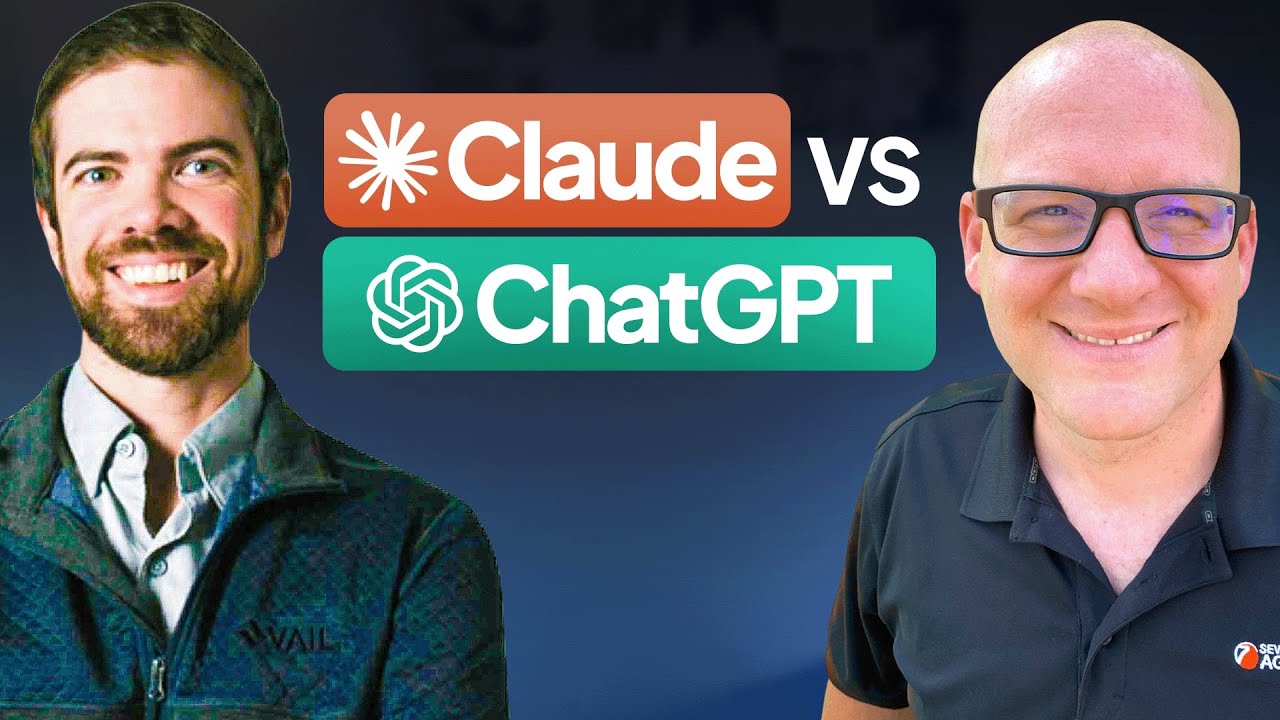
Click on the image above to watch the full video.
Andrew's background isn't what you'd expect. Philosophy and educational theory. But that's exactly what gives him an edge that most "AI experts" don't have.
"I'm Switching Careers Starting Tomorrow"
The day GPT-3 was announced in November 2022, Andrew looked at his wife and said he was switching careers. No hedging, no "let me think about it." Just a hard pivot into AI.
What's happened since then has been exponential. In his words: "It feels like I've learned more now in two months than in two years." And he draws a direct line between the ability to learn quickly with AI and the ability to create agents and software. They're the same skill.
Philosophy Is the Secret to Better Prompting
This is Andrew's contrarian take, and it's a good one.
Most people hear "get better at AI" and think they need to learn Python or take a prompt engineering course. Andrew says study philosophy. Study educational theory. Understand how humans teach, learn, and communicate — because AI is modeled after the brain.
"If you understand philosophical paradigms — how knowledge has been structured from Ancient Greece to modern patents — you can really prompt anything."
It makes sense when you think about it. Prompting is fundamentally about communication. The better you understand how to structure knowledge and convey intent, the better your outputs. The people who write the best prompts aren't necessarily the most technical — they're the clearest thinkers.
Why Claude Over ChatGPT
Andrew uses both, but Claude is his go-to for client work. His take is straightforward:
"Claude as an all-around model is just better at writing. And it's better at code."
The distinction he makes is about control. ChatGPT is great — and he was really impressed by the GPT-5 thinking mode — but Claude rewards good prompting more. If you invest in crafting a detailed prompt with clear structure, Claude gives you more back. That matters when you're doing client-facing work where the output quality has to be high.
Claude Projects: The 5% Rule
This is where Andrew's setup gets practical. He uses Claude Projects to organize everything by function:
- ICP Project — Ideal Customer Profile research for each client
- Buyer Persona Project — Detailed audience profiles
- Case Studies Project — Client success stories and proof points
- Industry Stats Project — Data and benchmarks
The key insight is capacity management. Andrew keeps each project under 5% of Claude's context capacity. The more cognitive load you put on it, the worse the output gets. Stuffing a project full of documents doesn't make Claude smarter — it makes it slower and less precise.
Our Toolbox. Every platform, plugin, and service we use and recommend, in one place. See the list →
He's also built custom styles for different content types — VSLs (Video Sales Letters), social media posts, lead magnets, and email sequences. One example he shared: recreating the JK Molina 21-day email sequence style, where Claude learned the voice and cadence from sample emails and could produce new ones on-brand.
Claude Code: Get Out of the Browser
This is where Andrew gets most animated. His advice to any marketer willing to listen:
"I'm not telling people Claude versus ChatGPT anymore. I'm like, get out of these things and get into the terminal."
Claude Code runs in VS Code's integrated terminal. It can read and write files directly, run Python scripts, scrape websites, analyze entire codebases, and deploy what Andrew calls "an army of agents." No copy-pasting between browser tabs. No hitting memory limits. No losing context halfway through a conversation.
The barrier is fear. Andrew says it took him about two hours to get over the initial intimidation of using a terminal. Two hours. After that, he realized how much he'd been limiting himself by staying in the browser. If you are in that same spot right now, Your First Day With Claude Code walks through the entire setup from zero — a complete beginner went from "What is Terminal?" to a working Claude Code project in 45 minutes.
"You just deployed an army of agents. That simple."
The practical upside for marketers: you can point Claude Code at a client's website and have it analyze every page, extract all the copy, identify gaps, and generate recommendations — all in one session. Try doing that in a browser chat window.
Once you get comfortable in the terminal, the next step is learning which work belongs in scripts versus which work belongs with the AI. Python handles the boring, repeatable stuff. Claude handles the thinking. That split is what turns Claude Code from a powerful tool into a reliable system.
The Future: Service Subscriptions, Not Software Subscriptions
Andrew sees a fundamental shift coming in how professional services work. AI agents will operate SOPs — standard operating procedures — and the business model will flip from software subscriptions to service subscriptions.
"It's almost like a SaaS — a subscription to a service but not software. It's just a service subscription because you have AI operating it."
The implication for marketers and agency owners: the technical marketer and the technical salesperson are coming. Natural language is the new programming language. You don't need to write code to build systems — you need to communicate clearly and understand what's possible.
Andrew's honest about the timeline: "I don't know what it looks like. We're probably one generation away from this being normal." But the people who learn these tools now will have a massive head start.
Where to Find Andrew
- GetStrategy.com — Andrew's main website
- Masterclass Marketing (Skool) — Free community
- AI Agent Vibe Engineers (Skool) — Paid community with weekly live consultations
- Andrew Ansley — More about Andrew and his communities
- Claude — The AI assistant Andrew uses for client work
- Why I Split My AI Workflow Into Two Layers — The next step after getting into the terminal: splitting deterministic work from creative work
- The Claude Code Tip Nobody Mentions — Running Claude Code from VS Code
- ChatGPT — The other side of the Claude vs ChatGPT conversation
See Also
We are an independent affiliate of Skool and may earn a commission if you sign up through links on this page. We are not employees or representatives of Skool.
We are an independent affiliate of Claude Code and may earn a commission if you sign up through links on this page. We are not employees or representatives of Claude Code.
Some links in this article are affiliate links. If you purchase through them, we may earn a commission at no extra cost to you. This helps support our content.
This article blends original content, AI-assisted drafting, and human oversight. How I write.
Stay Updated
Get notified when new content is published.
No spam. Unsubscribe anytime.