Crossing the Veil: The Surface Area of Judgment
Every business has a veil between the private work and the public.
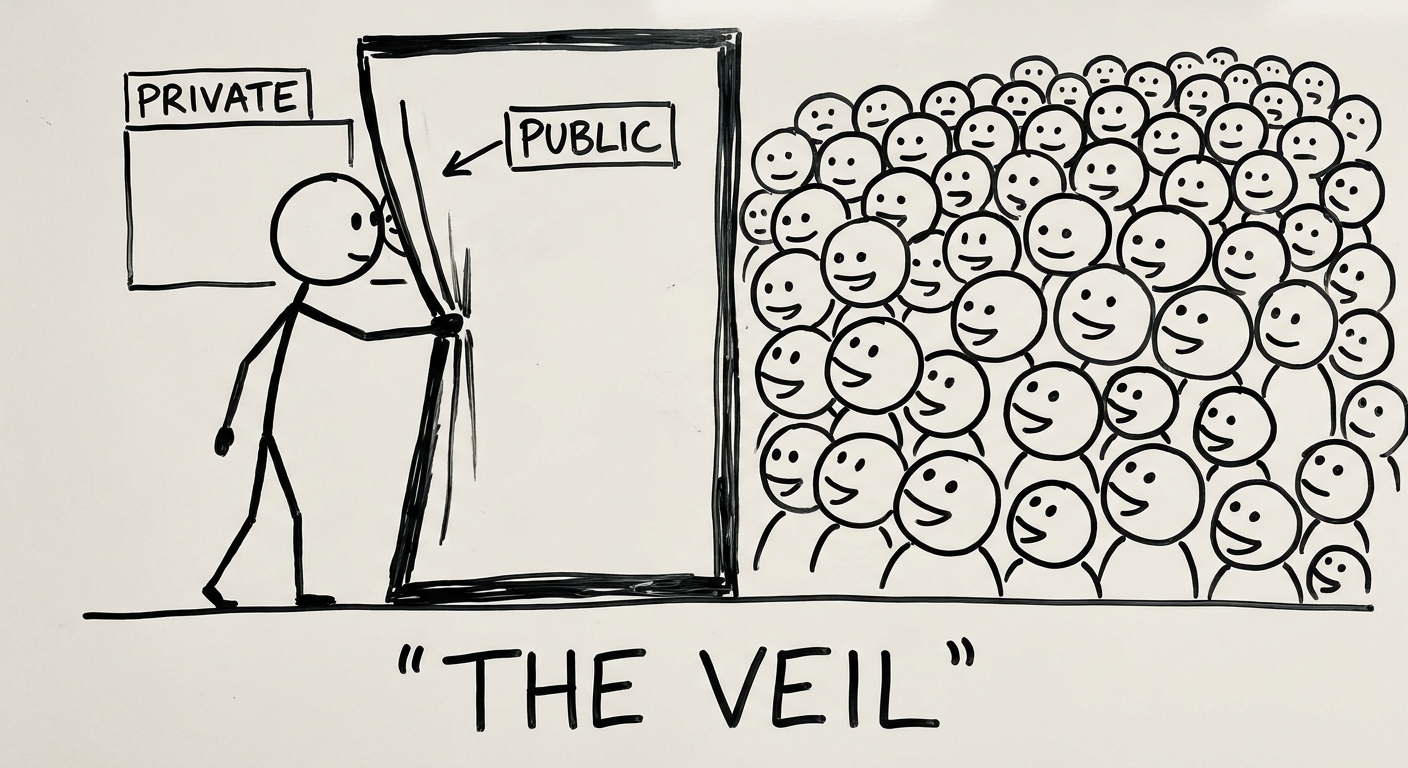
On one side, you are building. Logos, website mockups, ad drafts, email sequences, automations. It feels productive because it is productive. You can point to real output at the end of the day.
On the other side is the public. Real people with real opinions who can say yes, say no, or say nothing at all.
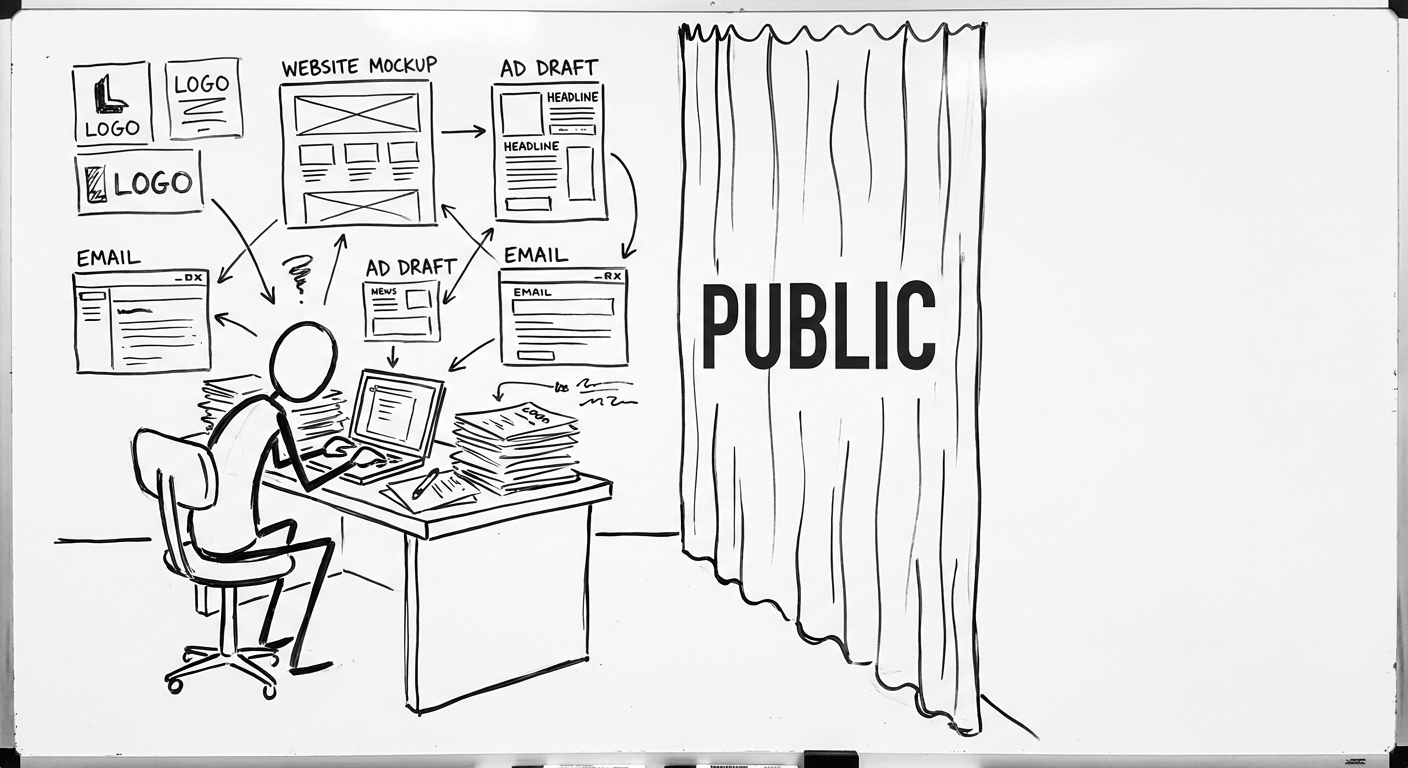
The thing separating those two sides is thin. It is just a curtain. But it feels enormous.
The Surface Area of Judgment
So what is the veil, really? It is every place where your work touches the public and the public can form an opinion about you.
Here are the surfaces:
- Social media posts — Facebook, LinkedIn, Instagram. You hit publish and every person scrolling past renders a verdict in half a second.
- Facebook DMs — One-to-one. The most exposed surface because there is no audience to hide behind. It is just you and one person, and they can leave you on read.
- YouTube videos — Your face, your voice, your ideas, on camera, permanent, with a public like/dislike counter and a comment section.
- Ads and retargeting — You are paying to put yourself in front of strangers who did not ask to see you. The judgment is instant and measurable.
- Emails — Landing in someone's inbox, the most personal digital space they have. They open or they unsubscribe.
- Your website — Someone Googles you, lands on your site, looks for three seconds, and either trusts you or bounces. Silent judgment.
- Google Business Profile and reviews — Public, permanent, and attached to your name. Stars and text that follow you around.
- Phone calls — Live, real-time. You say something and it is said.
- Comments and replies — You step into someone else's thread. Now their audience is judging you too.
- SEO and blog content — Articles that sit there and get found by strangers for months or years.
- In-person — Networking events, consultations, knocking on doors. The original veil. No screen to hide behind.
Each one of those is its own mini-veil of judgment.
The surface area of judgment is the total number of places where a stranger can look at what you did and decide what they think of you. Growing a business means deliberately increasing that surface area, which means deliberately increasing your exposure to judgment.
The Cruel Math
Here is the part that makes it hard. When you first cross the veil into the public, everything is stacked against you at the same time:
Your skill is the lowest it will ever be. You are the least polished version of yourself. Every post feels like proof that you are not ready.
Your fear is the highest it will ever be. You care the most about what people think at the exact moment you are the worst at what you do.
The silence is deafening. Someone called it "small YouTube channel hell." Ten views. Zero comments. You pour yourself into something, push it through the veil, and the public does not even notice. Rejection would at least be feedback. Silence just leaves you alone with the fear.
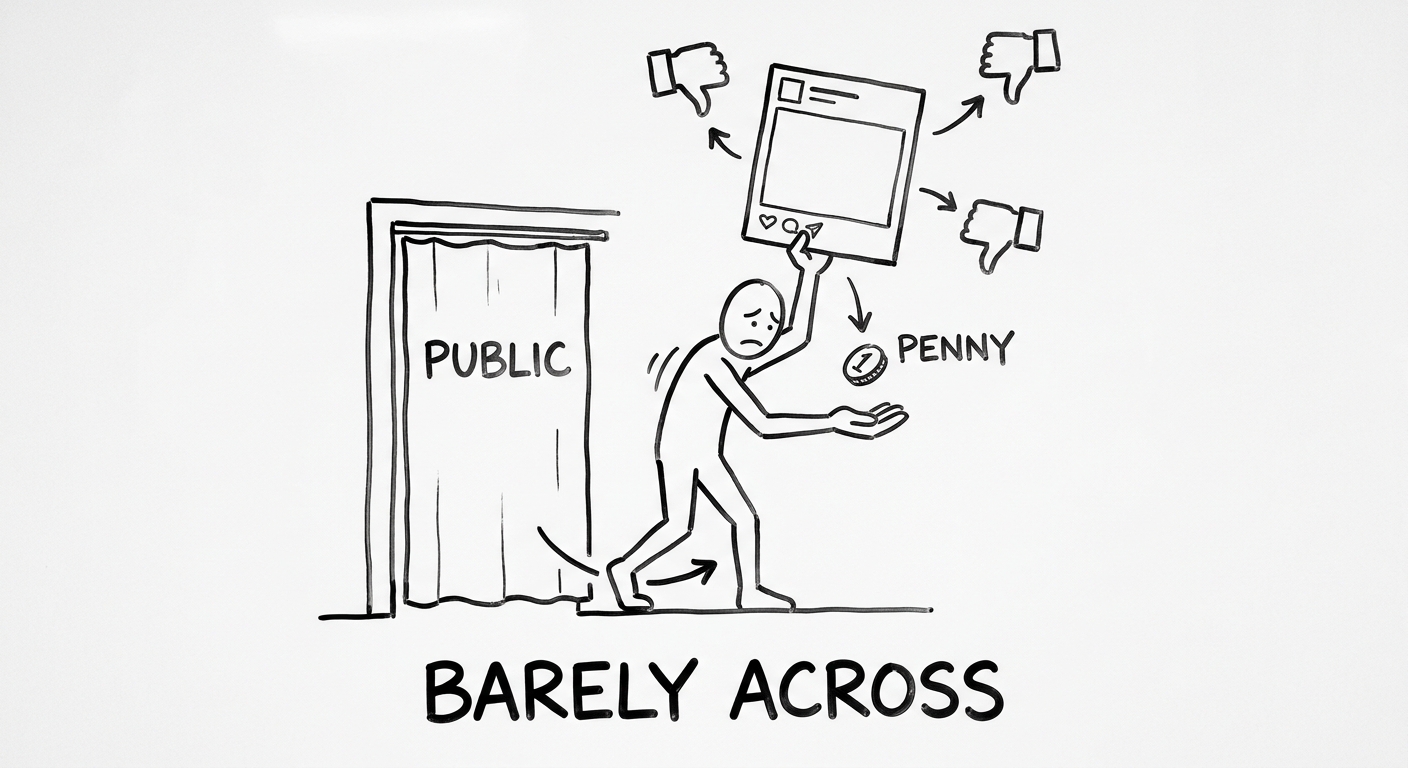
And even when you do make a little money, it is not the success you were hoping for. You gathered the courage, you took some real action, and you earned... a penny. A small win. Enough to prove it is possible, but not enough to feel like it is working. That gap between "I made something" and "this is actually working" is where the doubt creeps back in.
If you add paid ads, the cost per lesson is the most expensive it will ever be. You do not know how to target. Your creative is unpolished. You have no data to optimize against. You are burning the most money per result at the exact moment you have the least money to burn.
The Two Comfort Traps
Before you even get to the veil, there are two traps that feel like progress but keep you behind the curtain.
The learning trap. You watch tutorials, take courses, research tools. It feels like progress because you are gaining knowledge. But you are not touching the public. Zero surface area of judgment.
Our Toolbox. Every platform, plugin, and service we use and recommend, in one place. See the list →
The building trap. You make the website, set up the automation, redesign the logo for the third time, rewrite the copy. It feels even more like progress because you are producing real things. But it is all still behind the curtain. Zero surface area of judgment.
Both traps feel productive. That is what makes them traps. You can spend months in either one and point to real output — "I built a whole funnel" — without ever exposing a single thing to a single person who could say yes or no.
Tiptoeing Is Not Enough
Okay so you finally cross the veil. You post something. You send an email. You DM a couple people.
But dabbling is not crossing. Posting once a week, sending one email, DMing a couple people — that is testing the water with your toe. You will make a penny, get a thumbs-down, and retreat right back to learning and building. That penny is real, but it is not the success you are after.
The real results do not come from tiptoeing. They come from leaning all the way in. The veil is not a line you step over — it is a spectrum, and the success you actually want lives far on the other side. Post every day. Send emails every day. DM people every day. Not because hustle is the point, but because you need enough surface area out there for the math to start working. One post can flop and you learn nothing from it. A hundred posts is where you start to see what actually works, what gets ignored, and what gets people to respond.
The Fulfillment Trap
So let's say you do push through. You get some traction. A client says yes. Now you have to deliver.
And this is the sneaky part. The moment it works, it pulls you back behind the curtain.
You are heads-down building their website, setting up their CRM, running their project. The public-facing work stops. The posts stop, the emails stop, the DMs stop — because you are busy doing the thing you sold. And by the time you finish the project, your pipeline is empty again because you went dark for three weeks.
So the cycle becomes: hustle publicly to get a client, go silent to fulfill, finish the project, realize you have no next client, panic, start posting again from zero momentum.
The Job Is the Content
The answer is to stop treating fulfillment and public work as two separate activities. They are the same activity.
Every client engagement is a content factory:
- The before — "Here is what we started with." That is a post.
- The process — "Here is what we are building." That is a post.
- The result — "Here is what it looks like now." That is a post.
- The testimonial — "Here is what they said about it." That is a post.
- The lesson — "Here is what I learned doing it." That is a post.
- The case study — The full story start to finish. That is an email, a blog post, a video.
One job becomes six pieces of content. And every one of those pieces does double duty — it increases your surface area of judgment AND it serves as proof to the next prospect that you actually do the thing you say you do.
There is even something I think of as the pre-testimonial. Right after someone buys, before they have gotten any result, ask them: "Why did you buy this? You just spent money and you have not gotten a result yet. Why?" The answer captures something a regular testimonial never can — trust, gut feeling, the reason they said yes on faith. That is super persuasive to the next prospect because there is no result to hide behind. The person is explaining why they handed over money before seeing proof.
Sailing Past
The people who build real businesses are not the ones who waited until they were ready. They are the ones who kept increasing their surface area of judgment long enough for the skill to sharpen, the fear to fade, the audience to find them, and the ad costs to come down.
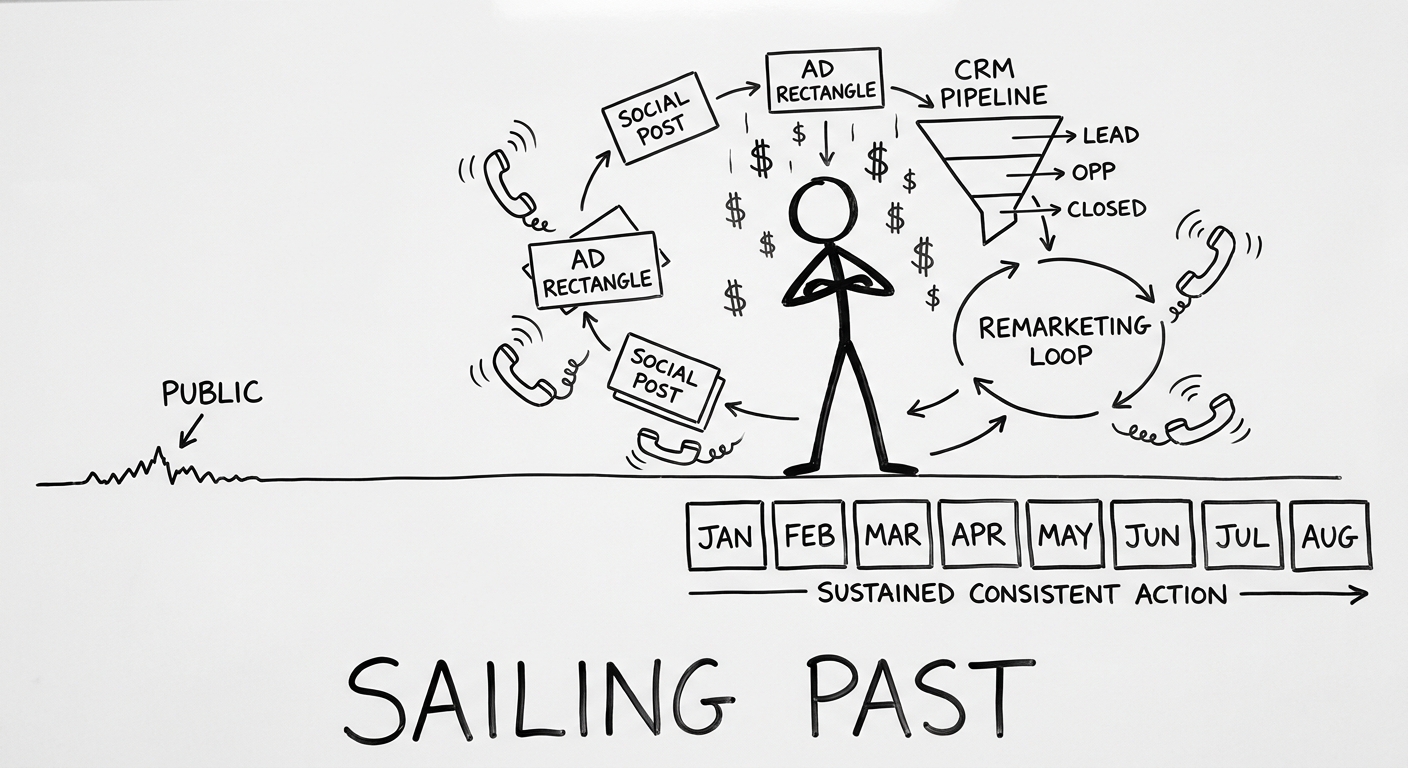
The veil does not reward caution. It rewards the person who walks through it every single day until they forget it was ever there.
This article blends original content, AI-assisted drafting, and human oversight. How I write.
Stay Updated
Get notified when new content is published.
No spam. Unsubscribe anytime.