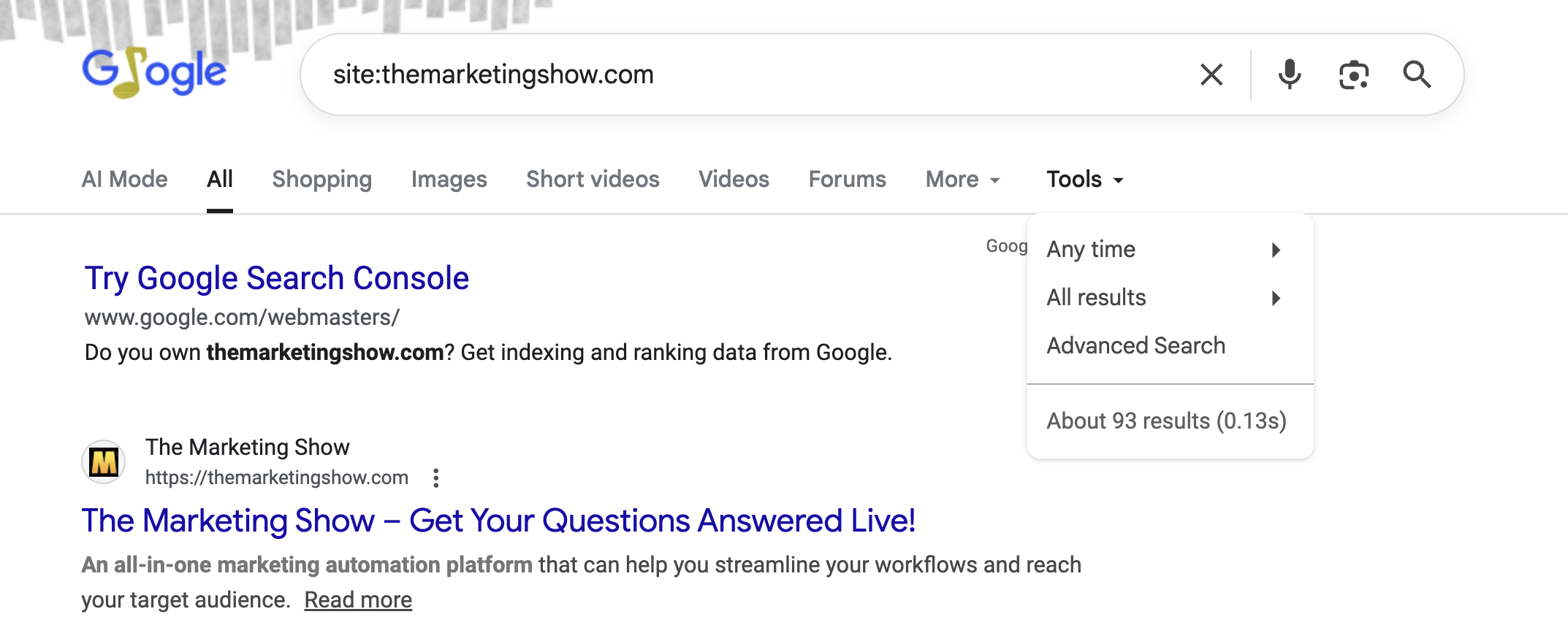
Published by James Hurst | The Marketing Show You're paying thousands a month for SEO services, but your Google Business Profile still isn't showing up where your customers are searching. You're ranked great in your own neighborhood, but the wealthy suburbs where your ideal clients live? You're invisible. Sound familiar? This is exactly what was happening with one of our clients—a premium hardscaping company in Utah. They were dominating in South Jordan where their office sits, but couldn't crack Park City where the high-end custom home projects actually happen. The gap between where they were and where they needed to be felt like an impossible canyon to cross. What if you could get a behind-the-scenes look at how a true SEO expert—the guy other SEO experts turn to for answers—approaches this exact problem? What if you could watch him analyze a real client website live, with no preparation, and learn his exact methodology for turning those red zones on your rank map into green? That's exactly what happened when I brought Caleb Ulku onto the show. Caleb is the SEO guru I personally follow—a former engineer who brings that systematic, analytical mindset to local SEO. I've made $30,000 to $40,000 in Upwork sales thanks to lessons from his course, and I regularly dig through his materials because his approach is thorough, practical, and refreshingly honest. This episode is a masterclass in local SEO strategy you won't want to miss. Click the image above to watch the full video The Challenge Local Businesses Face With Geographic Expansion Here's the brutal reality of local SEO: your Google Business Profile can be crushing it in one location while being completely invisible just 20 miles away. This isn't a glitch—it's how Google's algorithm works. Google uses three core factors to rank local businesses: proximity (how close you are to the searcher), relevance (whether Google believes you do what you say you do and serve the areas you claim), and authority (how trustworthy Google considers your business based on links and citations). When your business is physically located in one city but you're trying to attract clients in another, proximity works against you. As Caleb explained during the audit, when he pulled up the rank map for our client, there was a clear line where their top-three rankings dropped off to 20th position or worse. That line? It corresponded almost exactly with the city border between South Jordan and Park City. For premium service providers like custom hardscapers, roofers, or high-end contractors, this creates a painful catch-22. Your ideal clients with the biggest budgets live in wealthy areas that might be 30 or 40 minutes from your office. But Google's algorithm doesn't care about your service radius—it cares about where your business address sits on the map. The Foundation: Understanding How Google Actually Ranks Local Businesses Before diving into tactics, Caleb broke down the fundamental framework that drives all local SEO strategy. Google uses three primary ranking factors, and understanding these is critical because every optimization decision flows from them. Proximity: The Factor You Can't Control (Mostly) Proximity is simply the distance between the searcher and your Google Business Profile address. This is largely out of your control unless you're willing to consider opening a satellite office or getting creative with legitimate business locations. As Caleb joked, you could use "unmarked white vans" to change proximity, but that gets pretty creepy pretty fast. The entire goal of local SEO is to strengthen the other two factors so much that you can overcome proximity disadvantages. You want to expand that green zone on your rank map—the area where you appear in the top three results—farther and farther away from your physical location. Relevance: Convincing Google You Do What You Say You Do Caleb breaks relevance into two critical sub-categories: topical relevance and geographical relevance. Topical relevance means Google believes your business actually provides the services you claim. Geographical relevance means Google believes you'll serve customers in specific locations. You build both types of relevance through on-page content. This is where the "Core 30" strategy comes into play—creating dedicated pages for every category and service in your Google Business Profile, structured in a specific way that signals expertise to Google's algorithm. Authority: Why Links Still Matter in 2025 The third factor is authority (or trust), and here's Caleb's direct quote: "It's basically a code word for links." This concept dates back to a 1999 Stanford University paper by Larry Page, one of Google's founders, which laid out the foundational idea: if a trusted website links to your website, you must also have a trusted website. While some people claim SEO is dead, Caleb pointed out that with the recent announcement of OpenAI's Atlas search engine, there's massive overlap between what ranks on Google and what gets recommended by ChatGPT. Both systems face the same fundamental problem: how do you decide whether a local business is worth recommending based solely on what you can read about that business online? The Live Audit: What Caleb Found and How He Analyzed It Watching Caleb work through this live audit was fascinating because you could see his systematic process unfold in real-time. He'd never seen the client's website before, had no preparation, and still knew exactly what to check and in what order. Step 1: Checking Site Size and Indexation The first thing Caleb did was run a simple Google search: site:designscapes.com. This command tells Google to show every page it has indexed from that domain. The result? Only 40 pages indexed. For a local business, this isn't unusual, but it's on the smaller side. Why does this matter? As Caleb explained, he often gets requests from people with 500 or 600 indexed pages who are ranked 20th in their own lobby. That's a huge red flag that Google fundamentally dislikes the website due to technical problems. Just pumping out more content won't help—there's a deeper issue that needs fixing first. Step 2: Verifying the Google Business Profile Connection Next, Caleb searched for the phone number from the website footer to find the Google Business Profile. This simple check verifies that the phone number matches between the website and GBP—a basic but critical consistency signal. He uses the GMB Everywhere Chrome extension, which he mentioned is inexpensive and invaluable for quick GBP audits. One immediate finding: the profile only had one category and about seven services. Caleb's recommendation? You want at least two categories (ideally four) and 20 to 30 services for maximum topical relevance. This was a quick win that could be implemented immediately. Step 3: Running the Rank Map This is where things got really interesting. Using Lead Snap, Caleb ran a rank map for the keyword "hardscape" centered on the client's GBP location. The visual was striking—a tight cluster of green (top 3 rankings) immediately around the business address, then an abrupt drop to yellow, orange, and deep red just miles away. When we adjusted the map to focus on Park City where the client actually wanted to rank, the picture was clear: competitors who were ranking well in that area all had physical locations there. They weren't overcoming massive proximity disadvantages—they were winning because they had local presence. Step 4: Analyzing Competitor Website Size Caleb then opened the websites of the top three ranking competitors in Park City and ran site searches on each. The results? Five indexed pages, 77 pages, and three pages. These weren't massive content machines—they were small local business websites, some even smaller than our client's 40 pages. This was actually good news. It meant the competitive landscape wasn't dominated by SEO powerhouses with thousands of pages. With proper optimization, there was room to compete—if the proximity issue could be solved. Step 5: Technical Analysis With Screaming Frog While we talked, Caleb had been running Screaming Frog in the background. This free tool (for up to 500 URLs) crawls websites similar to how Googlebot does, providing detailed technical data on every page it finds. The crawl found 134 pages total, but only 40 were indexed. Using filters in the exported data, Caleb could quickly see which pages were indexable, what their word counts were, and identify technical issues. His finding? Most pages were thin on content. The longest page was the About Us at around 1,000 words, and many pages were significantly shorter. Caleb's rule of thumb: pages should have at least 1,000 words, and that includes everything—header, footer, navigation, body content. With AI making content creation essentially free, there's no reason to publish thin pages that won't perform. The Core 30 Strategy: Building Topical Relevance Here's where Caleb's engineering background really shines. He's developed a systematic approach to building topical relevance that he calls the "Core 30." This concept came from non-local SEO principles but was adapted and split-tested specifically for local businesses with his 97 plumbing clients. The Structure: Homepage to Categories to Services The Core 30 creates a clear content hierarchy that Google can easily understand. Start with your homepage—what Caleb calls the "GBP landing page" (the page people land on when they click through from your Google Business Profile). The homepage title tag should include your target keyword, which is typically your primary category plus city name. However, sometimes you need to "retheeme" if your target keyword doesn't match your primary category. In this case, the client wanted to rank for "hardscape" but Google doesn't have a hardscape category, so their primary category was "landscaper." The solution? Include the target keyword (hardscape) in the title tag and the primary category (landscaper) in the H1 heading. From there, create dedicated pages for every secondary category and critical service. On the homepage, add H2 subheadings for each secondary category with 50-70 words of content and a link to the dedicated category page. Do the same for your most important services. Category Pages Link to Service Pages Each category page follows the same pattern. It becomes a hub that links out to all the individual service pages under that category. Each service gets a subheading, 50-70 words of description, and a link to its dedicated page where the target keyword is that specific service plus the city name. When you build this out with two to four categories and 20 to 30 services, you naturally end up with around 30 pages—hence "Core 30." This structure tells Google exactly what your business does through clear, organized content architecture. Using AI to Audit Your Current Structure Here's where things get really practical. Caleb demonstrated using Claude with a custom prompt to analyze whether a website has proper Core 30 structure. He uploaded the internal pages file and links file from Screaming Frog, pasted in the client's GBP categories and services, and Claude identified all the missing pages and structural issues. The AI output showed exactly which category pages were missing, which services needed dedicated pages, and what content gaps existed on the homepage. Caleb emphasized that while AI is incredibly helpful for this type of analysis, it requires subject matter expertise to validate the results. As he put it: "AI helps subject matter experts do their jobs faster, but it doesn't help someone who doesn't know the subject do it right." Geographic Relevance: Ranking Beyond Your Physical Location Once you've built sufficient topical relevance (typically when your rank map shows 20-40% top-three coverage), you shift focus to geographic relevance. This is how you expand your green zone into areas where you're not physically located. Target Specific Landmarks and Neighborhoods The strategy is elegantly simple: look at your rank map and find spots where you're ranked fourth, fifth, or sixth. These are low-hanging fruit because it takes about the same effort to move from fourth to third as it does to move from 20th to 15th. But moving from fourth to third means you suddenly become visible to searchers—your traffic can increase by a factor of 100. Find a landmark, neighborhood, or recognizable location near that fourth-place ranking. Google Maps labels provide these—places like "Country Crossing" or "CR Hamilton Sports Complex." Write an article with a target keyword like "hardscaping near Country Crossing, Salt Lake City, Utah." What to Include in Geographic Content These location-specific articles should talk about the houses in that area where you've done work, provide driving directions your team takes from your business address to that location, and express how happy you are to serve that neighborhood. You can upload photos to your Google Business Profile and geotag them to match these areas for additional geographic signals. Caleb noted that while some people worry about claiming they serve areas where they don't have existing clients, the goal is to write content that positions you to attract those clients. The content is about your willingness and ability to serve that area, not necessarily about past work there. The Authority Factor: Building Trust Through Links Caleb breaks link building into two distinct types, each serving a different purpose in the overall strategy. Type 1: The "This Isn't AI Slop" Link This is a relatively new approach that emerged after ChatGPT-3.5 flooded the internet with auto-generated content. For every page you publish, source at least one decent link to it. It doesn't have to be an amazing, high-authority link—just any legitimate, non-spam link. This signals to Google that real effort went into the page, that it's not just mass-produced slop cranked out by AI tools connected directly to WordPress. With Google struggling to manage the overwhelming volume of AI-generated content, this simple signal helps your content get properly indexed and ranked. Type 2: Local Authority Links These are the links that actually move the needle on your rankings. The absolute easiest and most powerful? Chamber of Commerce membership. Caleb was emphatic about this: "If you're trying to rank locally and you're not a member of the Chamber of Commerce, you're seriously doing it wrong." For a couple hundred bucks a year, you get a powerful local authority link. Caleb has ranked personal injury law firms simply by joining a dozen different chambers of commerce in the areas they wanted to rank. Beyond chambers, look for local organizations seeking sponsorships: youth sports leagues, local charities, school programs. Caleb shared an incredible example where his client in Austin, Texas sponsored a TEDx talk at the University of Texas for just $250 and got a link from the utaustin.edu domain—a link he would have happily paid $5,000 for. That single link improved their average rank position by four or five spots. Finding Sponsorship Opportunities With AI Caleb mentioned having a prompt that helps identify local sponsorship opportunities. He demonstrated this working in his AI SEO Mastery Pro School community, where he stores all his tested prompts and training materials. The prompt analyzes your location and industry to suggest specific organizations, leagues, and events looking for sponsors. Quick Technical Wins: Homepage Optimization During the audit, Caleb identified several quick technical improvements that could be implemented immediately. Embed Your Google Business Profile The client's website didn't have their Google Business Profile embedded. This is a five-minute fix: go to Google Maps, search for your business, click "Share," grab the embed code, and add it to your website. This creates a direct connection between your website and your GBP that Google recognizes. Add Structured Data (Schema Markup) Caleb compared schema to labels on moving boxes. You don't need labels—you can open each box to see what's inside. But labels make the job much easier. Google is so good at crawling that it has "X-ray vision" to understand your content without schema, but adding it still helps, especially for AI systems like ChatGPT that rely heavily on structured data. Use a schema generator tool to create basic local business markup, then enhance it with Claude by providing your list of services and categories. Claude can expand the basic schema to include detailed service and category markup that helps both Google and AI systems better understand your business. Optimize Title Tags and H1 Headings The homepage title tag is the most important text on your entire domain—you'll rank first for whatever keywords are in your title tag. Include your target keyword (primary category or rethemed keyword) plus city name, with your business name at the end. The H1 heading should include your primary category even if you're retheming, because this helps Google connect your website to your Google Business Profile. Use AI to write compelling title tags and H1s that include the required keywords while remaining readable and engaging. The Proximity Solution: Should You Get a Second Location? Throughout the audit, one solution kept emerging: getting an office space in Park City where the client actually wanted to rank. Every competitor ranking well in that area had a physical presence there. Caleb's perspective was refreshingly practical. Office space can be found for a few hundred dollars a month—often less expensive than the cost of extensive SEO work trying to overcome massive proximity disadvantages. When he's had clients wanting to rank in Denver while located 40 miles outside the city, his advice was simple: rent office space downtown for $300-400 monthly. You'll need to do video verification for the new Google Business Profile, which Caleb has documented step-by-step in his training materials. His team has verified over 80 GBPs using his specific methodology for recording the verification video—how to start, what to show, staying under the two-minute limit, avoiding blurred footage, and not showing faces. The cost-benefit analysis is compelling. A few hundred dollars monthly for office space plus the Core 30 content structure could dominate a local market where competitors have small, unoptimized websites. Compare that to months of link building, content creation, and ongoing SEO work trying to rank 20+ miles from your physical location. Why SEO Isn't Dead (Despite What You've Heard) Near the end of our conversation, Caleb addressed the "SEO is dead" narrative that resurfaces every time new technology emerges. With OpenAI's recent Atlas announcement—a ChatGPT-driven search engine—the death knell was ringing again. Here's why that's wrong: there's massive overlap between what ranks on Google and what gets recommended by ChatGPT. Both systems face the identical foundational problem that Google has been working on since 1999: how do you determine which local business to recommend based solely on what you can read about that business online? The factors that influence ChatGPT recommendations versus Google Maps rankings are about 80% the same. Authority matters to both. Relevance matters to both. Quality content and structured data matter to both. The fundamental principles haven't changed—they've just become more important as more systems rely on them. Caleb's background story reinforces this. In late 2022, he was primarily focused on non-local informational SEO. When ChatGPT-3.5 launched, he immediately recognized that AI was going to disrupt informational searches—just like Google disrupted the mortgage calculator space by building calculators directly into search results pages. That's when he pivoted hard into local SEO in early 2023. His reasoning? "We're at least a few years from AI being able to replace your water heater." Local services requiring physical presence aren't going anywhere. And the methodology for ranking those services remains rooted in the same principles Google established 25 years ago. My Assessment This episode delivered exactly what I hoped for—a genuine, unscripted look at how a world-class SEO expert analyzes local business websites. Caleb is the real deal, and watching him work reinforced why I've invested in his training through the Local Marketing Vault and continue following his work. What I Love: Systematic, Engineering-Driven Approach: Caleb doesn't rely on guesswork or "best practices" from questionable sources. Everything is split-tested with real clients and backed by data from managing 97+ plumbing clients simultaneously Practical Tools and Workflows: The combination of free tools (Screaming Frog up to 500 URLs), inexpensive tools (GMB Everywhere, Lead Snap), and AI (Claude with custom prompts) makes this accessible regardless of budget The Core 30 Framework: Having a clear content structure to follow removes guesswork. You know exactly what pages to create, how to link them, and what target keywords to use Honest About Proximity Limitations: Rather than overselling SEO as a magic solution, Caleb was straightforward about when it makes more sense to get a second location versus trying to overcome geography Focus on Fundamentals: Despite all the AI hype and new tools, the strategy comes back to relevance, authority, and providing Google with clear signals about what you do and where you serve Areas for Improvement: Learning Curve for Technical Tools: Screaming Frog, while free, can be overwhelming for beginners. The filtering and exporting process Caleb demonstrated is second nature to him but would require practice for most people The Core 30 Needs Visual Examples: Caleb acknowledged this himself—the abstract explanation of homepage linking to categories linking to services makes sense conceptually but benefits hugely from seeing actual examples Geographic Content Strategy Raises Questions: The idea of writing about serving neighborhoods where you don't yet have clients might feel uncomfortable for some business owners concerned about authenticity Link Building Requires Ongoing Effort: Finding and securing local sponsorships, joining chambers, and sourcing "not AI slop" links for every page published adds up to significant ongoing work The bottom line? If you're a local business struggling to rank beyond your immediate neighborhood, this methodology works. It requires consistent effort and some technical competence, but it's not magic—it's just systematic execution of proven principles. The question isn't whether the strategy works (it does), but whether you have the discipline and resources to implement it properly over time. Frequently Asked Questions Why does my Google Business Profile rank well near my office but nowhere else? Q: Why does my Google Business Profile rank well near my office but nowhere else? Google uses proximity as one of three main ranking factors—basically how far the searcher is from your business address. If you're only strong in proximity but weak in relevance and authority, your rankings will drop off sharply as distance from your location increases. The solution is building topical relevance through proper website structure and geographic relevance through location-specific content, plus earning local authority links to strengthen the other two factors enough to overcome proximity disadvantages. What is the Core 30 and why does it matter for local SEO? Q: What is the Core 30 and why does it matter for local SEO? The Core 30 is a website structure strategy where you create dedicated pages for every Google Business Profile category and service—typically resulting in around 30 pages total. Your homepage links to category pages with 50-70 word descriptions, and category pages link to individual service pages the same way. This structure builds topical relevance by clearly showing Google exactly what services your business provides through organized, keyword-optimized content architecture. Should I get a second office location to rank in a different city? Q: Should I get a second office location to rank in a different city? If you're trying to rank 20+ miles from your current location and your ideal clients are concentrated in that distant area, a second location is often the most cost-effective solution. Office space can be rented for a few hundred dollars monthly—less than the cost of extensive SEO work trying to overcome major proximity disadvantages. Look at your rank map to see where competitors are physically located. If they're all in the area where they rank well, that's a strong signal that local presence matters for that market. Do I need expensive SEO tools to implement this strategy? Q: Do I need expensive SEO tools to implement this strategy? No. Screaming Frog is free for up to 500 URLs which is plenty for most local business websites. GMB Everywhere costs around $10-15 monthly for GBP audits. Lead Snap provides rank mapping capabilities. Claude AI can analyze your website structure with custom prompts. The most expensive component would be content creation, but AI has made that nearly free if you're willing to edit and verify the output. The bigger investment is time and knowledge, not tools. How many categories and services should my Google Business Profile have? Q: How many categories and services should my Google Business Profile have? Aim for at least two categories, ideally four, with 20 to 30 services listed. More categories and services give you more opportunities to match searcher intent and build topical relevance. During the audit, the client had only one category and seven services, which Caleb immediately flagged as too thin. Every category and service you add should have a corresponding dedicated page on your website as part of the Core 30 structure. What's the fastest way to improve local rankings right now? Q: What's the fastest way to improve local rankings right now? Join the Chamber of Commerce in every city where you want to rank. This is a couple hundred dollars per year per chamber and provides powerful local authority links. Beyond that, look at your rank map and identify where you're ranked fourth or fifth—these are low-hanging fruit. Create geographic relevance content targeting specific landmarks or neighborhoods in those areas with articles titled like "hardscaping near [landmark name], [city]." These tactical moves can show results within weeks rather than months. Are review count and star rating important ranking factors? Q: Are review count and star rating important ranking factors? Reviews are more important for conversion than for ranking. Caleb demonstrated this by showing examples where businesses with 89 or 93 reviews ranked fifth, while businesses with fewer reviews ranked higher. Reviews do have some ranking impact, but not as much as most people think. However, for conversion once you're in the top three, review quality is critical. The sweet spot is 4.5 to 4.8 stars—high enough to build trust but not so perfect it looks fake. How do I write content for areas where I don't have existing clients yet? Q: How do I write content for areas where I don't have existing clients yet? Focus on your willingness and ability to serve that area rather than past client work. Talk about the driving route your team takes from your office to that neighborhood, mention recognizable landmarks, express enthusiasm about serving that community, and describe the types of projects you'd be excited to tackle there. The goal is demonstrating to Google that you will serve customers in that location, not necessarily that you have served them there in the past. Is SEO still worth it with AI search engines emerging? Q: Is SEO still worth it with AI search engines emerging? Absolutely. There's about 80% overlap between factors that rank on Google and factors that influence ChatGPT recommendations. Both systems face the same problem: determining which local business to recommend based on online information. The fundamentals of authority (links), relevance (content structure), and trust remain critical across all platforms. Plus, local services requiring physical presence aren't going away—AI can't replace your water heater, as Caleb likes to say. How do I know if my website has technical SEO problems? Q: How do I know if my website has technical SEO problems? Run a site search (site:yourdomain.com) to see how many pages Google has indexed. Then use Screaming Frog to crawl your site and see how many pages actually exist. If you have hundreds of pages but are ranked 20th in your own immediate area, that's a red flag that Google fundamentally dislikes your website. Technical problems need fixing before more content will help. If you have a reasonably sized site (under 100 pages) and decent rankings near your location, technical issues probably aren't your main problem. Next Steps Ready to implement a systematic local SEO strategy that actually works? Here's your action plan: Watch the full tutorial on YouTube to see Caleb's methodology in action and catch details that work best in video format Run your first rank map with Lead Snap to visualize exactly where you're ranking and identify your biggest opportunities Audit your Google Business Profile using GMB Everywhere to see if you have enough categories (2-4) and services (20-30) listed Join your local Chamber of Commerce today for immediate authority links—this is the fastest, easiest win available Learn the Core 30 framework by joining Caleb's AI SEO Mastery Pro community where he provides all his tested prompts, workflows, and training materials Follow Caleb on YouTube at @calebulku for ongoing SEO strategy updates and case studies Final Thoughts This conversation reinforced something I've believed for a long time: there's no substitute for working with people who've actually done the thing at scale. Caleb isn't theorizing about what might work—he's showing you what he's proven works with nearly 100 plumbing clients that gave him the split-testing capability most SEO agencies can only dream about. The engineering mindset he brings to local SEO cuts through so much of the noise and pseudoscience in this industry. Everything comes back to the fundamentals: show Google what you do, where you serve, and that you're trustworthy. The tools and tactics may evolve, but those principles remain constant whether you're optimizing for Google's algorithm or ChatGPT's recommendations. If you found value in this breakdown, do me a favor and share it with another business owner or marketer struggling with local visibility. Let's keep pushing forward and building strategies that actually work. Affiliate Disclosure: Some links in this post may be affiliate links, which means I may earn a commission if you purchase through them at no extra cost to you. This helps support the channel and allows me to continue creating free content for you!